YOUR CERTIFICATION IS THE BEGINNING, NOT THE FINISH LINE.
EMT and paramedic school provide the essential foundation needed to enter emergency medical services. You learn patient assessments, treatment protocols, clinical skills, and how to recognize life-threatening emergencies. But what many new providers quickly discover is that passing an exam and managing a real emergency are two very different experiences.
The classroom teaches you what to do. The field teaches you how to apply it.
Real patients don't always present like textbook scenarios. Calls can be unpredictable, environments can be chaotic, and decisions often need to be made with limited information. There isn't always a perfect answer, and sometimes the greatest challenge isn't knowing a protocol—it's recognizing what matters most in the moment.
That's where proper field training makes the difference.
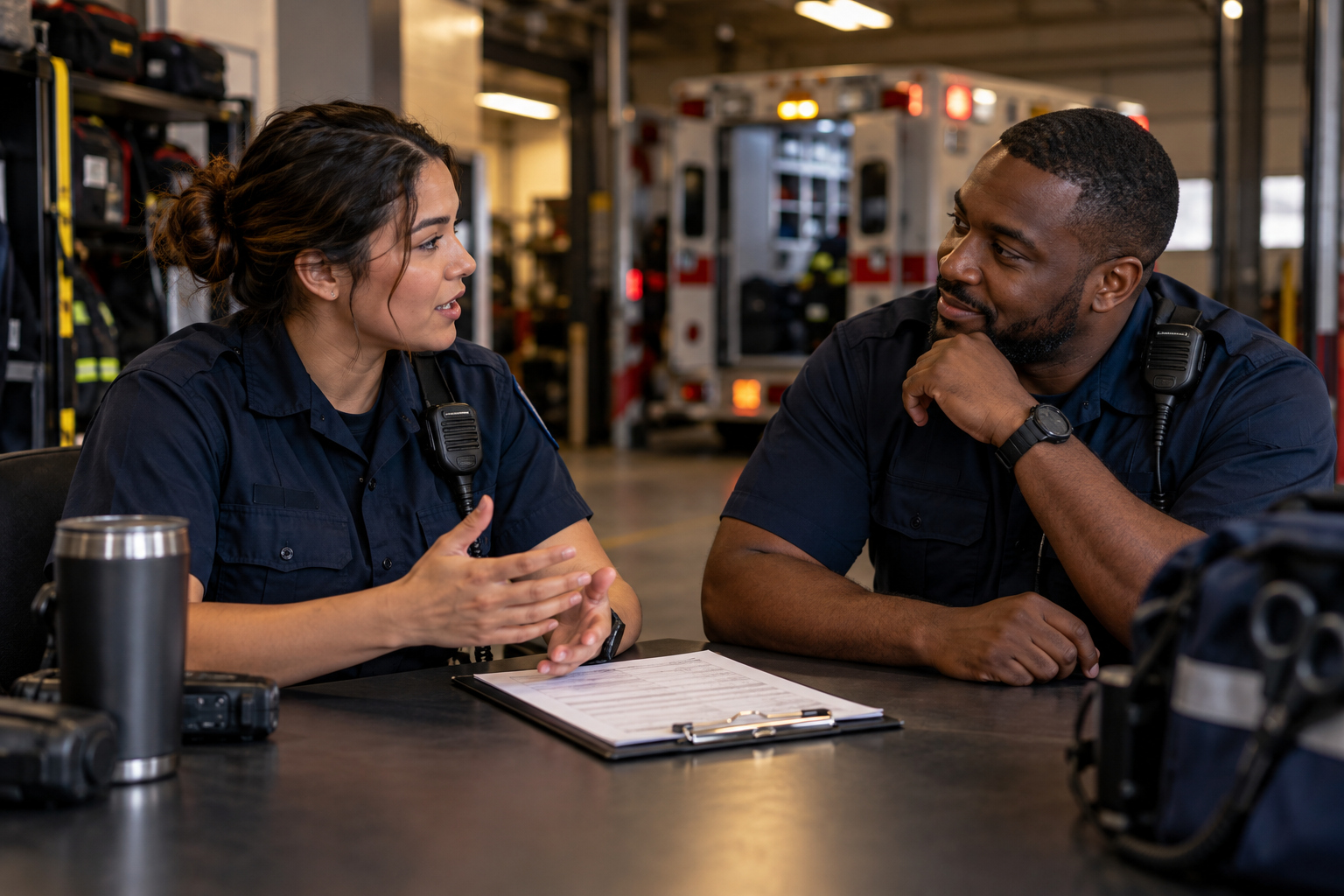
A strong Field Training Officer doesn't just show you how to complete a call. They teach you how to think critically, recognize subtle changes in patient conditions, communicate effectively, and develop confidence in your clinical judgment. They create an environment where questions are encouraged, mistakes become learning opportunities, and patient safety remains the priority.
Unfortunately, not every new provider receives that level of guidance. Some are expected to perform independently before they've had the opportunity to build the confidence and experience necessary to succeed.
Being newly certified doesn't mean being fully experienced, and being inexperienced doesn't mean being incompetent.
That's why we believe field training should be more than a checklist or a required number of shifts. It should be a structured, supportive experience that bridges the gap between education and independent practice.
Because ultimately, school gives you the foundation, experience builds your judgment, and quality mentorship helps turn that knowledge into exceptional patient care.
